5085 McHardy: Delivering Affordable Housing Through Passive House Design
BlogsProjects5085 McHardy: Delivering Affordable Housing Through Passive House Design
5085 McHardy: Delivering Affordable Housing Through Passive House Design
Lana Gill
The completion of 5085 McHardy delivers much-needed affordable housing to the Joyce–Collingwood neighbourhood in East Vancouver, while setting a strong benchmark for sustainable, community-focused construction through Passive House certification.
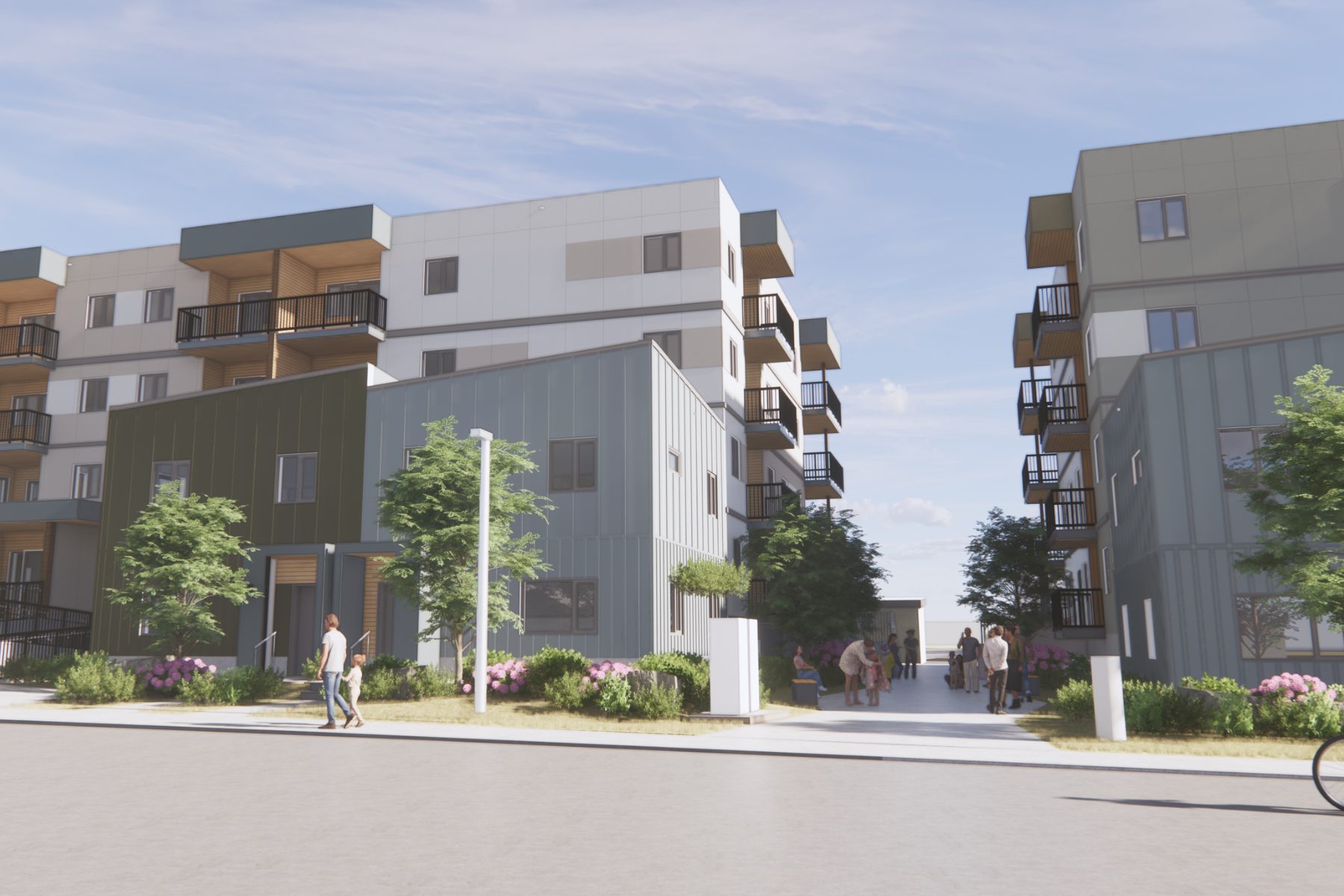
Operated by Community Land Trust (CLT) and developed in partnership with BC Housing and the City of Vancouver, this six-storey, wood-frame building was constructed to Passive House standards and delivered by Kindred Construction.
According to Layne French, Senior Development Manager at CLT, the project responds to the need for housing with rents geared to household income, including shelter-rate and low end–of–market options. It includes 102 affordable co-op housing units, ranging from studios to three-bedroom layouts, designed to provide long-term stability for residents and serve as another example of high-performance building in Metro Vancouver.
Achieving Passive House Performance: Design and Construction Challenges
Passive House design is built around five core principles that prioritize comfort, energy efficiency, and durability:
Heat recovery ventilation to provide fresh air while retaining warmth
High levels of airtightness to reduce drafts and energy loss
High-performance windows that help regulate indoor temperatures
Thoughtful building design that minimizes heat loss
Thick, continuous insulation to maintain comfort year-round
Achieving Passive House certification requires exceptional precision. 5085 McHardy exceeded expectations, coming in well below the required 0.6 air changes per hour at 50 pascals.
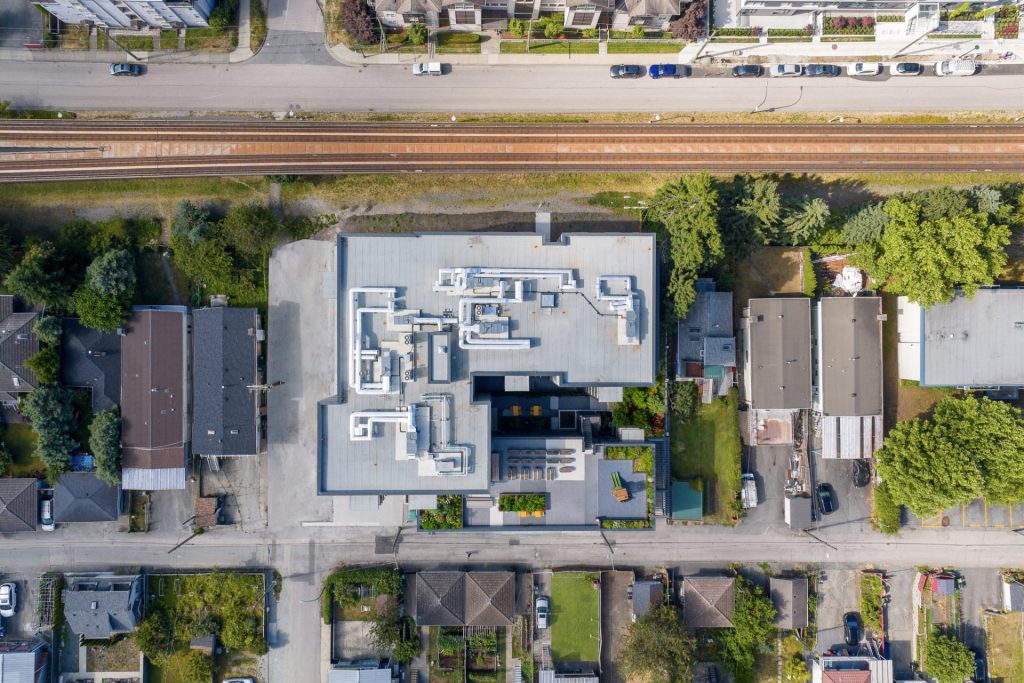
Sherman Wai, Associate Passive House Consultant at RDH Building Science, explained that the building’s u-shaped design was a key challenge, as it increases exterior wall area and potential heat loss.
To address this, the team strategically located the building’s ventilation systems on the roof, allowing for shorter duct runs that improve efficiency and reduce energy loss. The building is also wrapped in a continuous air barrier and insulation layer, helping to keep warm air in during winter and out during summer, improving comfort while reducing overall energy demand.
Going Beyond the Standard: Innovation on Site
The team credits exceeding Passive House certification to the precision work on site, supported by rigorous quality control, testing, and documentation processes that will help inform best practices for future projects.
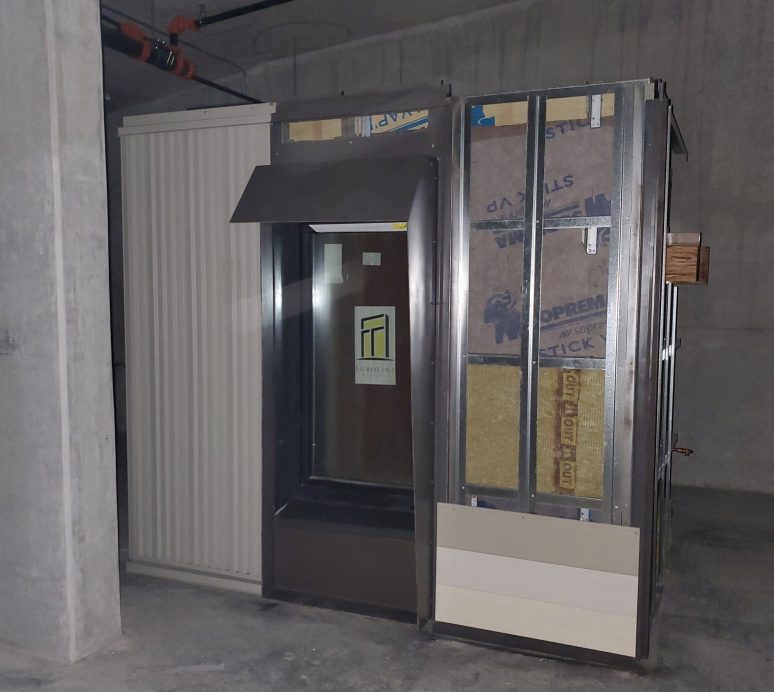
Kindred went above and beyond to test and validate critical design details before full installation by constructing a full-scale test chamber in the parkade, with envelope materials installed on the exterior. Working closely with consultants and trades, the building assembly was pressure-tested and smoke-tested to identify and address issues early, before they could impact the finished building. Through this process, the team uncovered weaknesses in the detailing around the mechanical systems. By bringing in an air barrier supervisor to oversee the work and guide completion of the air barrier system, the team was able to receive real-time expert advice and resolve issues as they arose.
Key Takeaways and Lessons Learned
“The success of the project hinged on collaboration between all parties, from design through construction and certification,” noted Wai. Achieving Passive House performance requires everyone to be aligned around shared goals, particularly when it comes to airtightness and execution of details.
For future projects, 5085 McHardy demonstrates the value of early integration, strong partnerships, and a shared commitment to performance. When teams work collaboratively to align the goals of the client, the city, and the community, the result is housing that delivers superior performance, lasts longer, and serves the needs of the residents and the community sustainably for years to come.
On February 18th, 2026, Kindred Construction had the honour of welcoming the Prime Minister of Canada, Mark Carney, and Minister of Housing and Infrastructure, Gregor Robertson, for a site tour of the Vienna House project: a partnership between the City...
Addressing Revelstoke’s Growing Housing Needs Through Partnership Kindred Construction’s latest addition to its growing portfolio of affordable housing projects, 420 Downie Street in Revelstoke, B.C., marks an opportunity to construct the first development delivered under British Columbia’s redevelopment program aimed...
This Journal of Commerce article highlights a partnership between Kindred Construction and Sapphire Balconies to install 40 innovative, thermally broken aluminum balconies at Vienna House, a six-storey, 123-unit affordable housing development in Vancouver. Designed for high energy performance and reduced...